
 EN
EN English
 Español


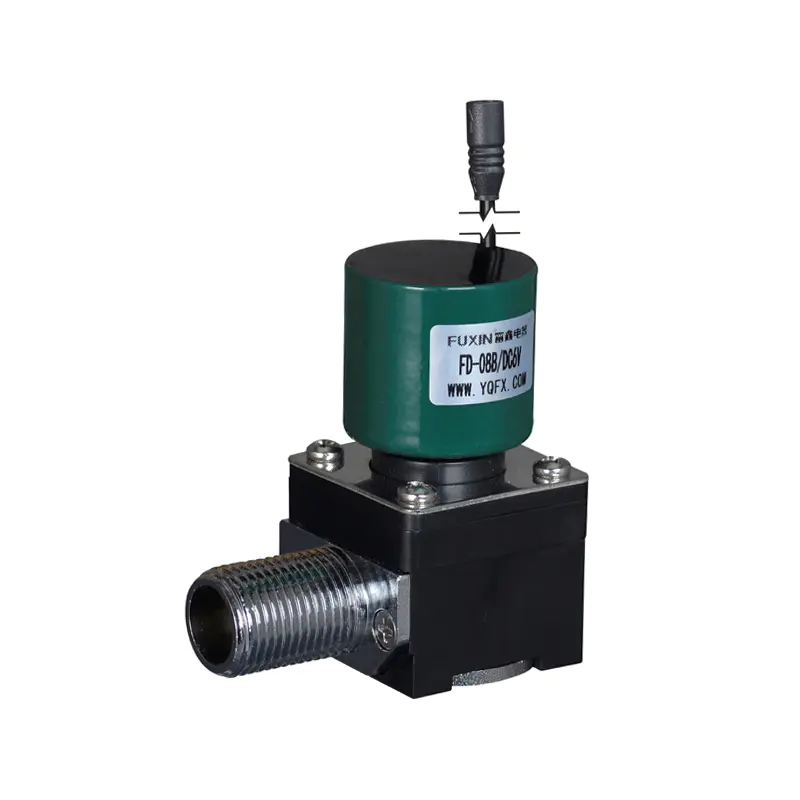
Designing a fluid control system that will run reliably over years of service involves decisions that look straightforward at the component level but carry long-term consequences at the system level. One of those decisions — whether to use pulse-driven latching valves or continuously energized valves — tends to get resolved by default rather than deliberate choice, and the default is often the familiar option rather than the appropriate one. A Bi Stable Solenoid Valve operates on a fundamentally different electrical logic than a continuously energized valve, and the two are not interchangeable substitutes. Matching the valve type to the control architecture, the power supply, and the safety behavior the system requires is what determines whether that choice holds up in field conditions.
What Is the Difference Between Pulse Operation and Continuous Operation?
How Continuous Operation Works
A continuously energized solenoid valve holds its actuated position by keeping the coil powered throughout the entire period the valve is open or closed. Remove the power — intentionally or through a fault — and the spring return mechanism drives the valve back to its resting state. The valve position directly reflects the electrical state at any given moment.
This is a familiar and predictable behavior. The trade-off is that the coil dissipates energy as heat the entire time it is energized. Over extended hold periods, this thermal output accumulates in the valve body, the coil insulation, and the surrounding assembly.
How Pulse Operation Works
A pulse-driven valve — the operating mode of a Bi Stable Solenoid Valve — uses a brief electrical signal to switch the valve from one state to the other, then requires no further power to hold that position. The valve retains its state through a permanent magnet latch rather than continuous electromagnetic force.
A second pulse of opposite polarity reverses the position. Between pulses, the coil draws no current. The valve sits in whatever position it was last commanded, maintained by the magnet alone. This means power consumption occurs only during switching events, not during hold periods.
The control logic changes accordingly. Rather than "apply power to hold open," the logic becomes "send open pulse, send close pulse" — two discrete events rather than a continuous state.
Energy Consumption: Where the Difference Becomes Practical
The Thermal Load of Continuous Energization
A coil dissipating heat continuously affects more than the electricity bill. Heat accumulates in the coil windings and degrades insulation over time, shortening coil service life. In assemblies with multiple solenoid valves mounted in close proximity, the combined thermal output can affect ambient temperature within the enclosure, which changes the operating conditions for nearby electronics.
For systems with long open or closed dwell periods — irrigation zones that stay open for hours, HVAC actuators that hold a position through extended operating cycles — the coil is energized nearly continuously during operational hours. The cumulative heat generation and energy cost across a large installation is not trivial.
How Pulse Operation Changes the Consumption Profile
A latching valve consumes power only during the brief switching pulse — typically a duration measured in fractions of a second. Between pulses, consumption drops to effectively zero for the valve coil itself. In battery-powered applications, remote installations, or solar-powered field systems, this difference determines whether the application is feasible at all.
For systems where the valve changes state infrequently — holding open for extended periods and switching closed periodically — the energy saving from latching operation is proportional to how long the valve spends holding rather than switching. Applications with long dwell times at any position benefit substantially.
How Does Power Loss Behavior Differ Between the Two Types?
This is a consequential design difference and the one frequently misunderstood during system specification.
Continuous Valve Behavior on Power Loss
When power is interrupted to a continuously energized valve — whether through a controlled shutdown, a power fault, or a communication failure — the spring return mechanism moves the valve to its designated safe position. This behavior is predictable and exploitable in safety system design: the fail position is determined at time of purchase and is reliable regardless of when or why power is lost.
Systems that require a defined safe state on power loss — process shutoffs, emergency isolation, pressure relief — are designed around this behavior. The spring return is not just a mechanical feature; it is the safety mechanism.
Bi Stable Valve Behavior on Power Loss
A latching valve retains its current position when power is lost. It does not move. Whatever state the valve was in at the moment of power interruption is the state it holds until a new switching pulse is received. There is no return to a mechanical default.
This behavior is an advantage in some system contexts — a valve that was commanded open for irrigation does not suddenly close and require reconnection to reopen when a brief power glitch occurs. Position is preserved through power interruptions without any active intervention.
However, in systems where power loss indicates a fault condition that requires a defined safe response, this behavior means the safety logic must be implemented differently. A latching valve cannot serve as an inherent fail-safe component the way a spring-return valve does. The control system must either include a dedicated safe-state command sequence or use a separate safety device to achieve the same behavior.
Comparing the Two Operation Modes Across Key Factors
| Factor | Continuous Operation Valve | Bi Stable Solenoid Valve (Pulse) |
|---|---|---|
| Power consumption during hold | Continuous — coil energized throughout hold | Near-zero — no power required between switching pulses |
| Heat generation | Ongoing during hold periods | Only during switching pulse — negligible residual |
| Behavior on power loss | Returns to spring-return safe position | Retains last commanded position |
| Fail-safe suitability | Direct — spring return defines safe state | Requires deliberate safe-state logic in control system |
| Battery or solar compatibility | Limited — continuous drain affects capacity | Well-suited — low average current consumption |
| Control signal requirement | Continuous hold signal | Brief open pulse and close pulse |
| Driver circuit complexity | Simple — on/off power switching | Slightly higher — requires pulse generation and polarity control |
| Coil thermal lifespan | Lower in high-duty applications | Higher — coil not under sustained load |
| Suitable dwell periods | Short to moderate hold times | Long hold times benefit significantly |
What Applications Favor Pulse Operation?
Battery-Powered and Remote Field Systems
Any system powered from a battery or energy harvesting source — solar irrigation controllers, remote monitoring nodes, wireless-controlled fluid systems — has energy budget constraints that continuous energization does not meet. A latching valve that draws current only during switching can operate for extended periods on a battery capacity that would be exhausted quickly by a continuously energized alternative.
For agricultural irrigation networks covering large areas with wireless control nodes, the energy economy of pulse operation is often the deciding factor in whether the system architecture is viable.
HVAC and Building Automation with Long Hold Cycles
Zone control valves in heating and cooling systems spend much of their time holding a position — open or closed — for extended periods. Switching events are infrequent relative to the total operating time. In a large building with many zone valves, the aggregate energy consumption from continuous energization across all valves during normal operation is substantial. Transitioning to latching valves changes this consumption profile meaningfully across the full installation.
Systems Where Position Retention Through Power Interruption Is Required
In some applications, a power interruption does not indicate a fault — it may be a normal operational event, a brief grid fluctuation, or a controlled shutdown and restart sequence. If the valve position should be preserved through these events without requiring a reconnection and re-command cycle, a latching valve handles this automatically. The position survives the interruption and the system resumes from the same state.
IoT and Low-Power Wireless Control Systems
Embedded control systems using microcontrollers on constrained power budgets need to be able to trigger valve state changes without maintaining a sustained output to hold the valve. Pulse operation fits naturally into interrupt-driven control architectures where the processor can sleep between events and wake only to issue switching pulses.
What Applications Favor Continuous Operation?
Process Safety Applications Requiring Defined Fail Position
Any system where a specific valve position is required on power loss for safety reasons — emergency shutoff valves, overpressure relief, process isolation — relies on the spring return behavior of a continuous valve. The coil energization holds the valve in its active position; remove energy, and the valve goes to its safe state automatically without any control system involvement.
This behavior cannot be replicated with a latching valve through the control system alone in the same way, because the control system that would issue the safe-state pulse is itself dependent on power being present. For true fail-safe behavior, the spring return mechanism of a continuous valve is structurally more reliable than software or control logic-dependent safe-state commands.
Frequently Switching Applications
Applications where the valve switches state very frequently — multiple times per minute — may not benefit meaningfully from latching operation. The energy savings come from holding periods, not from the switching pulses themselves. A valve that switches at high frequency spends relatively little time in any hold state, which reduces the proportion of total operating time where latching operation saves energy.
Very high cycle rates also need to be checked against the rated switching life of any latching valve design, since each state change involves the magnet engagement and release cycle.
Simple Control Systems Where Driver Complexity Is a Constraint
A continuous valve requires only a switch — open the circuit to energize, close it to de-energize. A latching valve requires a pulse driver circuit that generates the correct polarity and duration for each switching event. In very simple systems where the control electronics are constrained, this additional circuit requirement may not be practical.
What Does the Control Architecture Need to Support Pulse Operation?
H-Bridge or Dual-Coil Driver
A latching valve with a single coil requires polarity reversal between the open and close pulses. An H-bridge driver circuit allows the same coil to be energized in both directions by switching the current path. Dual-coil versions use separate windings for open and close commands, simplifying the driver to two separate switches but increasing the connector and wiring count.
The choice between single-coil polarity-reversing and dual-coil designs affects both the driver circuit design and the wiring harness. For PLC-controlled systems, many current output modules support the required configurations directly. For custom embedded designs, the H-bridge is a well-understood circuit element that adds modest complexity.
Pulse Duration and Energy
The switching pulse needs to be long enough to ensure the magnet engages fully but short enough to avoid unnecessary heat in the coil. The required duration varies with valve size, coil inductance, and supply voltage. Manufacturers typically specify the required pulse parameters, and control system logic needs to implement these parameters rather than applying a generic on/off command.
How to Decide Which Type Fits a Specific Application
Work through these questions when evaluating which operating mode suits the system:
- How long does the valve spend in any given position between state changes? Longer dwell periods favor latching operation for energy savings.
- What should the valve do if power is interrupted unexpectedly? If the answer is "return to a safe position," a continuous spring-return valve is the mechanically reliable choice. If the answer is "hold its current position," a latching valve handles this naturally.
- Is the system battery-powered, solar-powered, or otherwise constrained on average current consumption? If yes, continuous energization may not be feasible.
- Can the control system generate properly timed, polarity-controlled switching pulses? If the existing control hardware is limited to simple on/off outputs, latching operation requires a driver stage between the controller and the valve.
- What is the switching frequency during normal operation? Very high cycle rates change the energy calculation and need to be checked against the valve's rated cycle life.
Selecting between pulse and continuous operation is not a preference question — it is a system requirements question that connects to power supply design, safety behavior, control architecture, and long-term operating cost simultaneously. A Bi Stable Solenoid Valve is the appropriate choice when low average power consumption, position retention through power interruptions, and long dwell periods are part of the design requirements. A continuously energized valve remains the appropriate choice when inherent fail-safe spring return is a system safety requirement and the energy consumption of continuous hold is acceptable. Zhejiang Fuxin Electrical Technology Co., Ltd. manufactures Bi Stable Solenoid Valves and related fluid control components for industrial automation, HVAC, irrigation, and IoT applications, with configurations covering a range of valve sizes, coil voltages, and driver requirements. If you are evaluating valve types for a current system design, comparing latching and spring-return options, or looking to specify pulse-driven valves for a low-power application, reaching out to their technical team is a practical step toward confirming which product specification matches your system's control and safety requirements.