
 EN
EN English
 Español


Automatic flow control systems often perform well under ideal conditions and then begin drifting as thermal loads rise, coil temperatures climb, and valve position becomes less predictable. Engineers managing fluid dosing, irrigation automation, pneumatic circuits, or HVAC control loops know this pattern well — a system that held tight tolerances during commissioning gradually widens its operating band as the hardware ages and heat accumulates in continuously energized components. The Bi Stable Solenoid Valve addresses a specific portion of this problem at its source, through a design that eliminates the continuous energization requirement that drives much of the thermal and mechanical degradation in conventional solenoid valve systems.
What Makes a Bi Stable Solenoid Valve Different
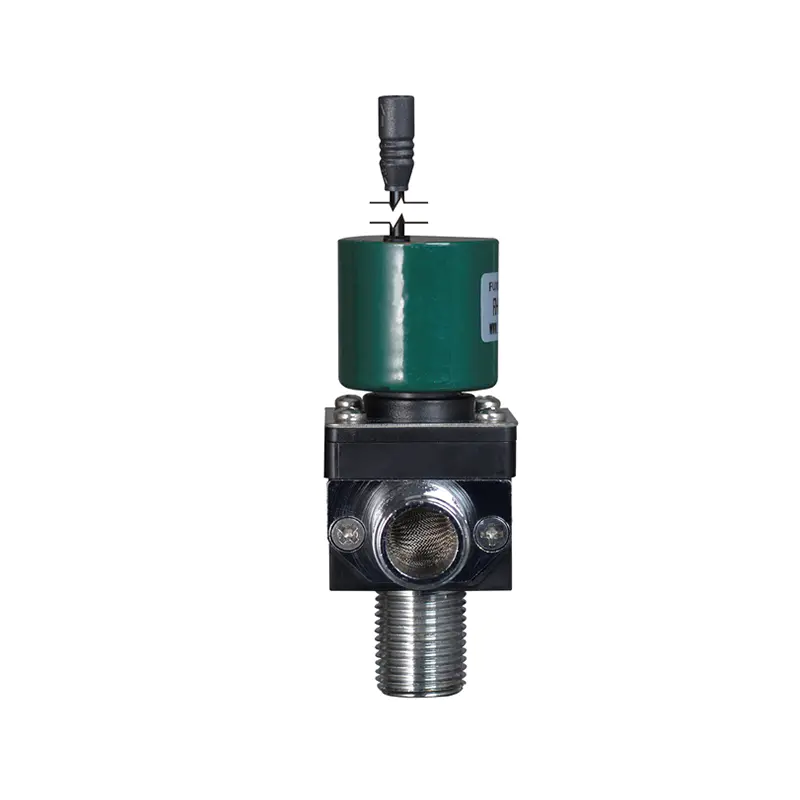
The State-Retention Mechanism Explained
A conventional solenoid valve maintains its open or closed position only while electrical current flows through the coil. Remove the current and a spring returns the valve to its default position. This design is straightforward and widely used, but it means the coil must remain energized for the entire duration that the valve holds a non-default state — which can be seconds, minutes, or hours depending on the application.
A Bi Stable Solenoid Valve, by contrast, uses a permanent magnet in addition to the electromagnetic coil. A brief electrical pulse opens or closes the valve, and the permanent magnet then holds the plunger in position without any continuing current. Another pulse in the opposite polarity reverses the state. The valve remembers its position between pulses — mechanically, through magnetic retention — without drawing power to maintain it.
This is sometimes called a latching solenoid valve design, and the practical implications extend well beyond energy consumption.
Why "Bistable" Is the Accurate Description
The term bistable refers to a system with two stable states — in this case, fully open and fully closed — both of which the valve can maintain without external energy input. Unlike a monostable valve that has one natural resting position and must be held against it by an active signal, a bistable valve is equally stable in either position. This symmetry matters for control system design, because neither state imposes an ongoing energy or thermal burden on the hardware.
The Accuracy Problem with Continuously Energized Valves
Coil Heat Affects Valve Behavior in Ways That Compound Over Time
When a solenoid coil is energized continuously, it generates heat as a byproduct of its electrical resistance. This heat builds up in the coil winding and transfers into the valve body and plunger assembly. As temperature rises, the electrical resistance of the coil changes — which changes the current flowing through it, which changes the magnetic force on the plunger, which changes the force holding the valve in its commanded position against the opposing spring.
In a system maintaining a critical flow rate, this thermal variation introduces a slow drift in valve behavior that is difficult to compensate for without closed-loop feedback calibrated specifically to thermal state. Most systems do not have this, and the result is that valve positioning becomes less consistent over time as operating temperature stabilizes at a higher equilibrium than was present during initial commissioning.
Pressure Fluctuations Interact with Thermal Effects
The relationship between thermal state and valve behavior becomes more complex in systems with variable inlet pressure. A valve that holds its position reliably at a given magnetic force and spring preload will respond differently to the same pressure fluctuation at elevated temperature compared to ambient temperature — because the effective holding force has changed.
This interaction produces a pattern of control error that appears inconsistent and difficult to diagnose because its root cause is not mechanical wear or calibration drift in the traditional sense. It is a thermally induced change in the equilibrium between the valve's electromagnetic holding force and its mechanical loading from fluid pressure and spring return.
How Bistable Design Addresses These Accuracy Limitations
No Continuous Current Means No Continuous Heat
The direct consequence of bistable operation for flow control accuracy is thermal. Without continuous coil energization, the valve body does not accumulate heat during normal operation. Pulse actuation introduces a brief thermal transient — the coil is warm for a fraction of a second during each switching event — but this heat dissipates quickly and does not accumulate in the way that continuous energization does.
The practical result is that a bistable valve operates at approximately ambient temperature during the hold phase, regardless of how long the valve remains in a given position. This removes the temperature-dependent variation in holding force that contributes to positioning drift in continuously energized designs.
Position Stability Is Mechanically Guaranteed
A bistable valve's hold position is maintained by permanent magnetic force, not by a balance between electromagnetic force and spring return. The magnetic retention force is not temperature-dependent in the way that coil-generated electromagnetic force is — it is a fixed characteristic of the permanent magnet assembly.
This means the valve's ability to hold its position against fluid pressure variations is consistent across the operating temperature range of the system. A valve that holds reliably at startup will hold with the same reliability after hours of operation — not because the control system has compensated for drift, but because the mechanism responsible for holding position does not drift with temperature.
Switching Consistency Across Operating Life
Wear in solenoid valve systems accumulates primarily at the sealing surfaces and in the plunger guide assembly. In continuously energized valves, the plunger is held against the seat or stop continuously, and microscopic variations in contact force as temperature and coil resistance change create small but repeated micro-movements at the contact surface. Over thousands of operating hours, this contributes to seat wear and progressive changes in switching characteristics.
In a bistable design, the plunger is actively moved only during switching events and then held by magnetic retention without continued mechanical pressure variation. The switching event is brief and consistent — the same pulse magnitude produces the same plunger movement each time. This tends to produce more consistent switching behavior across the service life of the valve compared to continuously energized alternatives.
A Technical Comparison: Bistable vs Standard Solenoid Valve
| Performance Factor | Standard Solenoid Valve | Bi Stable Solenoid Valve |
|---|---|---|
| Power requirement during hold phase | Continuous coil energization | Zero — magnetic retention only |
| Thermal state during operation | Coil and valve body heat up | Operates near ambient temperature |
| Position stability under pressure variation | Variable — dependent on coil temperature | Consistent — magnetic retention is temperature-stable |
| Switching mechanism | Electromagnetic vs spring return | Pulse actuation, both directions active |
| Behavior during power interruption | Returns to default (spring) position | Maintains last commanded position |
| Coil wear mechanism | Continuous thermal cycling of windings | Minimal — brief pulses only |
| System complexity for accurate control | May require thermal compensation | Simpler — position is stable without active compensation |
| Suitable for battery or low-power systems | Limited | Well suited — very low average current draw |
Where Bistable Valves Improve Flow Control System Performance
Irrigation and Agricultural Water Management
Irrigation systems that control flow to multiple zones over extended periods are a natural application for bistable valve technology. A conventionally designed irrigation controller energizes zone valves for the full duration of each watering cycle — which can be twenty minutes or more per zone. Multiplied across multiple zones operating over a season, the cumulative energy consumption from continuous coil energization is substantial.
Beyond energy, the thermal behavior of continuously energized valves in outdoor agricultural environments — subject to ambient temperature swings between day and night operation — creates the kind of thermally-driven position variation described earlier. A bistable design eliminates this variable by holding each zone valve in position magnetically for the full cycle duration, consuming power only at the open and close transitions.
Fluid Dosing in Process and Pharmaceutical Applications
Precision fluid dosing — where repeatable delivery of small fluid volumes is required — places demanding requirements on valve consistency. Any variation in the valve's opening and closing characteristics introduces dosing error that accumulates across production batches.
The consistent switching behavior of a bistable solenoid valve, combined with its thermal stability during hold phases, supports the repeatability that dosing applications require. The pulse-actuated switching also allows dosing control systems to define the switching event with high precision — the duration and magnitude of the actuation pulse can be controlled exactly, which is more deterministic than relying on the balance between coil force and spring return to define switching speed and position.
HVAC and Building Automation
Building automation systems managing heating and cooling circuits often include large numbers of zone valves that may remain in a fixed state for extended periods. A thermal zone that is held at temperature with no occupancy may have its supply valve closed for hours or days at a time. Bistable valves in this context hold their position through the full unoccupied period without any electrical load, and switch quickly and reliably when the zone returns to service.
The interaction with building automation control systems is straightforward: the controller sends a brief pulse to change valve state, then monitors the zone without maintaining any valve-related current. Battery-backed control systems and wireless valve controllers benefit particularly from this characteristic, since the average current draw of a bistable valve network is dominated by the brief switching pulses rather than by continuous hold current.
Pneumatic Automation and Industrial Control
In pneumatic automation, valve switching events are frequent and valve positioning accuracy affects downstream actuator behavior. Pneumatic valves in automated assembly, packaging, and process equipment switch many times per hour, and the consistency of each switching event directly affects the precision of the mechanical output.
Bistable pneumatic solenoid valves provide consistent switching behavior that does not degrade with coil temperature, which supports the repeatability that automated process equipment requires. They also allow pneumatic circuits to be designed with fail-hold behavior rather than fail-safe spring-return — a consideration that matters in some process contexts where returning to a default position on power interruption is not the desired failure mode.
Does Bistable Design Affect Response Speed?
Addressing the Common Concern About Switching Latency
One question that arises in evaluating bistable valves for high-frequency switching applications is whether the pulse actuation mechanism introduces switching latency compared to a directly energized standard valve. The concern is reasonable: a standard valve begins responding as soon as current starts flowing in the coil, while a bistable valve requires a pulse of defined duration and polarity.
In practice, the switching speed difference between bistable and standard solenoid valves in typical industrial sizes is small enough to be negligible for the majority of flow control applications. The switching time is determined primarily by plunger mass, spring force (in the case of monostable designs), and the electromagnetic impulse — parameters that are similar across both designs.
Where bistable valves may not be the preferred choice is in applications requiring extremely high switching frequencies — such as hydraulic servo systems or proportional control applications where partial valve opening is required. These applications have specific design requirements that go beyond the on/off switching that bistable designs address well. For the broader category of zone control, on/off flow regulation, and state-hold applications, switching speed is not a practical limitation.
Selecting the Right Application Context for Bistable Valves
When Bistable Design Delivers Clear Value
Bistable solenoid valves are not a universal replacement for all solenoid valve applications. They deliver the clearest performance and efficiency advantages in specific contexts:
- Applications where valves remain in a fixed state for extended periods — minutes, hours, or longer
- Systems where coil heat buildup in conventional valves creates observable control drift or thermal management concerns
- Battery-powered, solar-powered, or energy-constrained control systems where average current consumption is a design constraint
- Applications requiring fail-hold behavior on power interruption rather than spring-return to default
- High-cycle-count applications where coil longevity is a maintenance concern
When Standard Solenoid Valves Remain Appropriate
Standard monostable solenoid valves continue to be the appropriate choice where:
- Fail-safe spring return to a defined default position is a safety or process requirement
- The control system is designed around the assumption that power interruption equals valve closure
- Very high switching frequencies are required, and pulse control adds unacceptable complexity
- Application duty cycles are short and coil thermal effects are negligible
The selection between bistable and standard designs should be made based on the specific duty cycle, fail-behavior requirements, and energy constraints of each application — not as a blanket preference for one design over the other.
The improvement that a Bi Stable Solenoid Valve delivers to automatic flow control accuracy is not a single dramatic performance gain — it is the elimination of a set of gradual, compounding degradation mechanisms that undermine control precision in conventional designs over time. By removing continuous coil energization from the hold phase, it removes the thermal variation that alters holding force, the coil wear that accumulates from continuous current, and the position drift that results from the interaction between thermal state and fluid pressure variation. What remains is a valve that holds its position consistently across its operating temperature range, switches with repeatable characteristics over its service life, and imposes minimal electrical load on the control system between switching events. For engineers designing precision flow control systems, evaluating bistable designs against these specific performance dimensions — rather than treating solenoid valve selection as a commodity decision — leads to system choices that hold their accuracy longer and require less compensatory complexity in the control loop. Zhejiang Fuxin Electrical Technology Co., Ltd. manufactures a range of solenoid valve products including bistable and pulse-actuated configurations for industrial flow control, irrigation, HVAC, and pneumatic automation applications, with technical documentation and specification support available for engineering teams evaluating component options for precision control system designs.